
Ahmadiyya Muslim community’s Tilford security works approved amid ‘Trojan horse’ claims
Marcus McQuilton

Residents have accused Tilford’s Islamabad centre of becoming a “Trojan horse” for unauthorised building development.
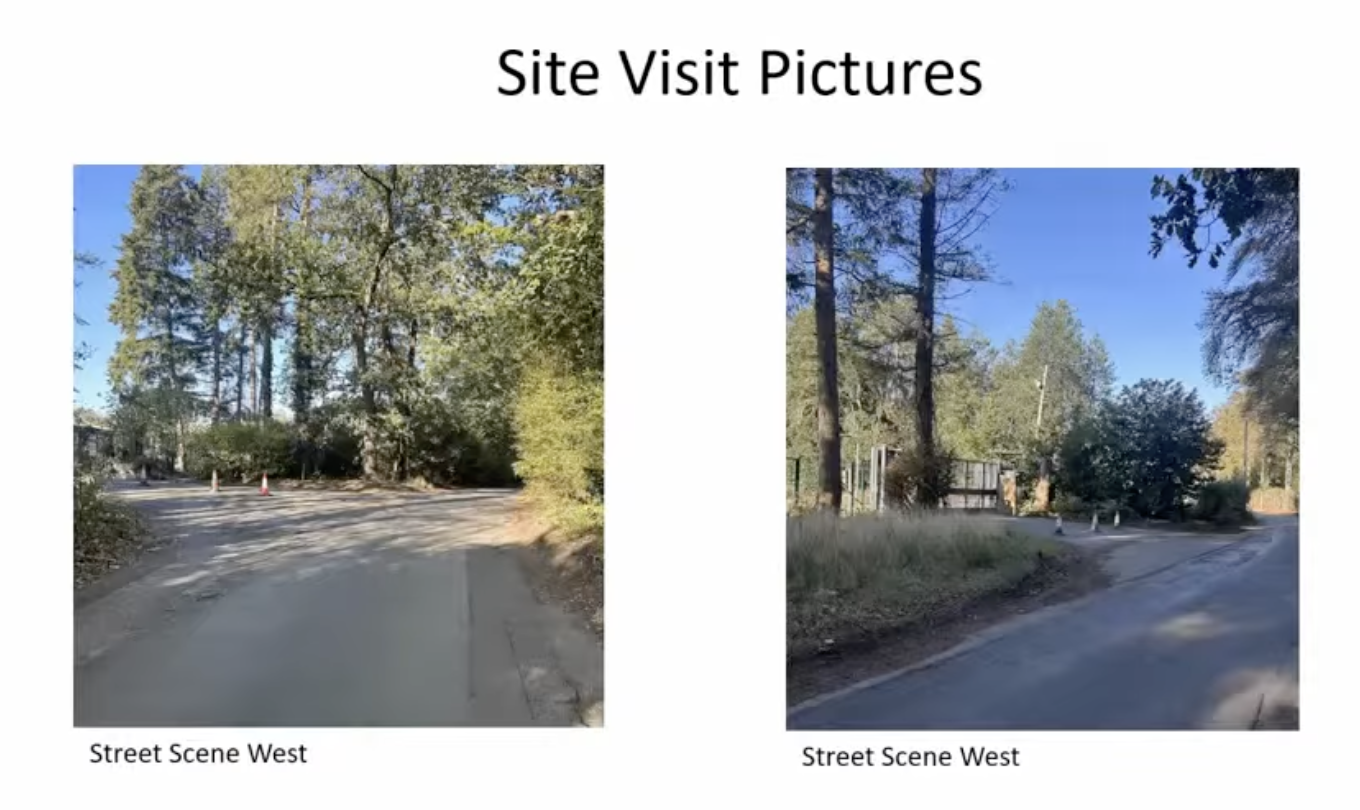
The accusations were made at Waverley’s planning committee this week as councillors considered retrospective planning permission for two security kiosks, a CCTV and emergency services control room and three internal roads at the Ahmadiyya Muslim community’s site.
Residents argued that Islamabad’s role had changed from a regional facility to an international headquarters since the community’s worldwide spiritual leader, Caliph Mirza Masroor Ahmad, moved there in 2019.
Tilford parish councillor Nigel Morland questioned whether the security infrastructure was partly supporting an unauthorised change of use.
“Think what would happen if the Archbishop of Canterbury decided suddenly to move to Tilford,” he said.
He claimed the parish council had approved the Islamabad site as a regional centre, but it had since become the community’s worldwide headquarters.
Cllr Morland said the community had disputed that description, maintaining that its headquarters were in Pakistan and Islamabad was a spiritual centre because the Caliph lived there.
But he pointed to the community’s own publications.
“Their own TV channel even published a 17-minute video guide to the site which opens with the words, ‘Welcome to the new international headquarters’,” he said.
Cllr Morland acknowledged the abuse faced by the community and praised its peaceful nature and charitable work, but questioned whether that should give Islamabad a “free pass on planning”.
Former Tilford parish councillor Jay Shearn said villagers had largely supported the redevelopment granted permission in 2015.
“Since permission was granted in 2015, which almost all of us in the village supported, we have watched with growing dismay as Islamabad has added almost an acre of tarmac and car parking, a raft of extra lighting and ugly intrusive security infrastructure,” she said.
“And none of this has been built with planning approval. We feel badly let down and frankly misled that what we originally supported was nothing more than a Trojan horse paving the way for intentional unauthorised development.”
She said the changes frequently brought more than 500 extra cars a day onto narrow country lanes and damaged the area’s dark skies through excessive lighting.
Speaking in support of the application, Sean Tickle said the works were a response to increasing threats and security concerns.
“The measures before you are not intended to expand the use of the site and the site remains in its lawful use as education and religious use,” he said.
He described the kiosks, control room and internal lanes as a coordinated safety system to manage entry, monitor incidents and support emergency services while minimising disruption to Sheephatch Lane.
“The applicant sincerely apologises these facilities were installed in a sensitive Green Belt location without approval, and we are working closely with your officers to ensure this does not happen again,” he said.
He also offered to meet members of the local community to explain the planning processes.
The site lies within the Green Belt, Surrey Hills National Landscape and Area of Great Landscape Value. The council received 49 objections and 23 representations in support.
The eastern kiosk, control room and internal roads were already installed when the application was considered.
Planning officers concluded that the kiosks and control room were inappropriate development in the Green Belt and identified harm to the protected landscape.
However, they said advice from counter-terrorism specialists supported the security measures and the positioning of the kiosks.
Officers concluded that protecting occupants, visitors and the public outweighed the planning harm, providing the “very special circumstances” required for approval.
They also accepted the applicant’s argument that the internal lanes would ease traffic pressure during festivals and daily prayers by separating arriving vehicles, security checks and departing traffic.
Ryan Snow, speaking for Tilford Action Group, said residents accepted the need for security but questioned whether less harmful alternatives had been properly considered.
“Members should satisfy themselves that less harmful alternatives have been considered,” he said.
Cllr David Munro said he understood why the community wanted security measures, but criticised its approach to planning.
“I think the passion which has been aroused is because the community have not been following the planning regime. I’m afraid that is just a fact,” he said.
“We are in a position today which was totally avoidable. It reflects badly on the people who are in charge of planning at Islamabad – I regret saying that as I know them well.”
He warned that similar planning breaches must not continue.
Councillors also questioned how they could assess the security justification when confidential information from specialists could not be disclosed to them.
Cllr Jacquie Keen said members were effectively “left in the dark”.
“We don’t know how much security is needed, how serious it is, what it is,” she said.
Find out about planning applications that affect you by visiting the Public Notice Portal.
The committee approved the application by nine votes to two, with one abstention.