
Surrey researchers want to paint Elon Musk's reflective satellites black
Hugo Berger
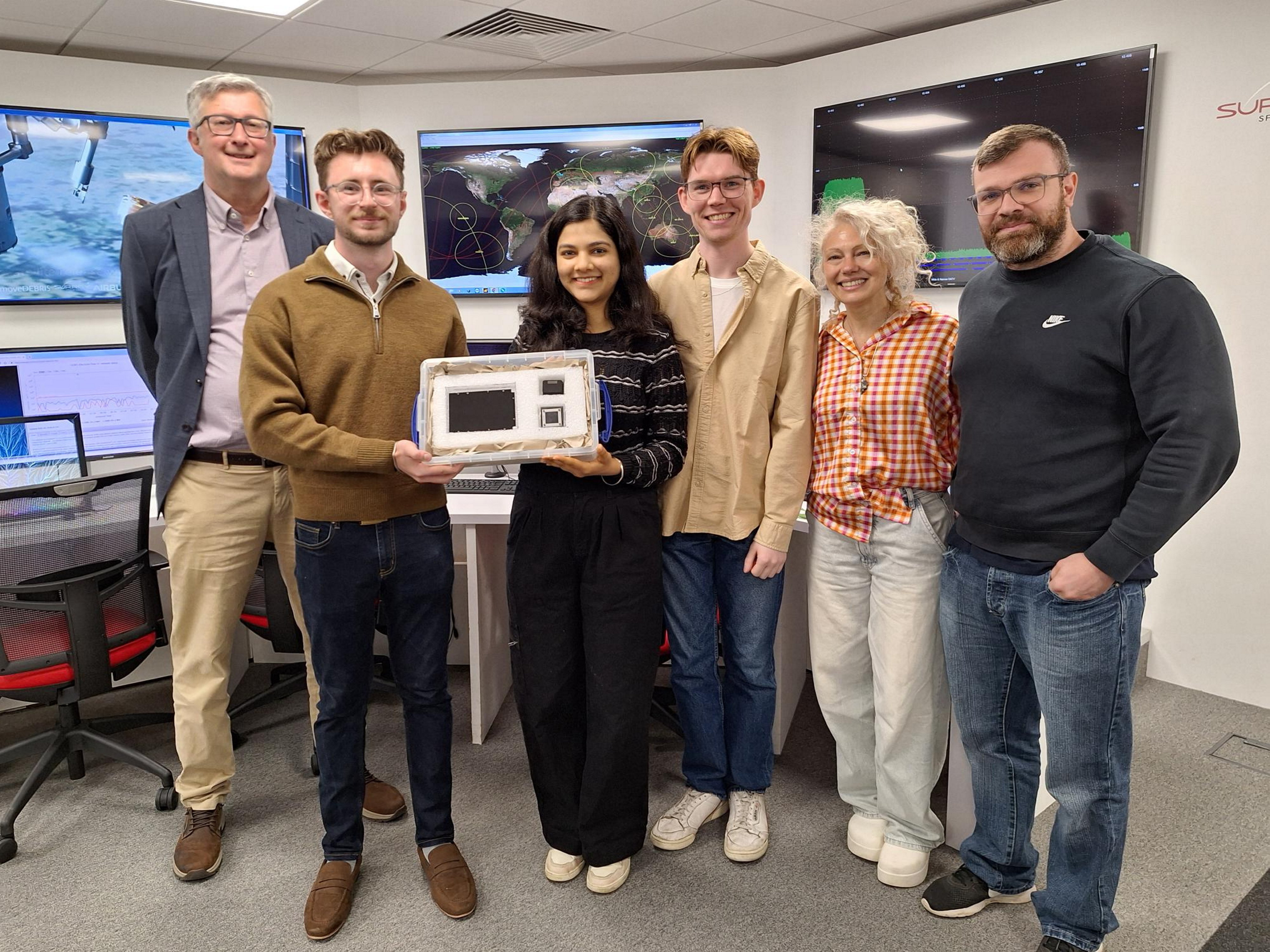
Surrey researchers are working to solve the problem of Elon Musk's reflective satellites - by painting them black.
A new partnership between Surrey NanoSystems and the University of Surrey is aiming to tackle what has become a major concern for astronomers worldwide.

They are working on using Surrey NanoSystems's newest product, Vantablack 310, which is a super-black coating.
When Vantablack 310 is applied to a surface, it reflects only 2 percent of incoming light, meaning it absorbs the remaining 98 percent.
This high level of light absorption makes the coated surfaces appear extremely dark, helping to minimise the unwanted brightness from satellites that can disrupt the work of stargazers.

More than 8,000 low Earth orbit (LEO) satellites already orbit Earth and projections estimate a rise to 60,000 by 2030, partly driven by the development of mega-constellations.
To combat this problem, satellite operators have begun experimenting with mitigation strategies including dark coatings and changes to satellite position, though the negative impact on ground-based measurement persists.
Surrey NanoSystems, with a heritage in ultra-black technologies, say their new solution, Vantablack 310, is a handleable, customer applied coating, resistant to the challenging LEO environment.

The technology will be trialled on the Jovian 1 mission, scheduled to launch in 2026, which will be the first satellite mission from JUPITER – the Joint Universities Programme for In-Orbit Training, Education and Research.
One side of a shoebox-sized CubeSat will be coated with Vantablack 310, marking the first UK-led initiative to explore solutions for reducing satellite brightness.
The initiative aims to not only improve space sustainability but also demonstrate the efficacy of Vantablack 310 as a hull-darkening solution.

Dr Keiran Clifford, Senior Technologist and project lead at Surrey Nanosystems, said: "Our latest coating technology, Vantablack 310, offers super-black performance across a wide range of viewing angles, while remaining robust to the challenging LEO environment.
"We’re proud to be working with our partners at the University of Surrey to deliver innovations in the satellite sector, ensuring sustainable and equitable access to a night sky for all."
Researchers from the University of Surrey are developing ways to evaluate the experiment from Earth.